
When Ancient Knowledge Becomes the Technology of the Future
The history of architecture is not solely a history of constant innovation. Some of its most significant breakthroughs have emerged not from the invention of new materials, but from reinterpreting knowledge that has existed for centuries.
Rammed earth is one such material. For thousands of years, it has been one of humanity's most accessible and reliable building resources. Examples of its use can be found throughout the architecture of China, Yemen, Morocco, Spain, France, and many other regions across Europe. The availability of local soil, low energy requirements, high thermal performance, and its natural adaptation to local environments made rammed earth one of the world's most enduring construction systems.
Following the Industrial Revolution, however, earth construction almost disappeared from contemporary building practice. Concrete, steel, and fired brick became the dominant materials of modern architecture. Although earth buildings remained environmentally sustainable, they were limited by a fundamental structural challenge: rammed earth performs exceptionally well in compression, but has very limited capacity to resist tension. This characteristic restricted its application to relatively massive and low-rise structures.
Today, as architecture seeks environmentally responsible materials and more sustainable construction systems, this ancient technique has regained global attention. The fundamental question has become:
Can thousands of years of construction knowledge, combined with contemporary engineering, unlock entirely new structural possibilities?
For nearly two decades, Swiss architect Roger Boltshauser has been pursuing the answer to this question.
A Research Journey Beyond a Single Building
For Boltshauser, earth has never been simply an ecological building material. His research is founded on the belief that traditional construction techniques still possess potential and, when combined with contemporary engineering, can give rise to entirely new structural systems.
A key figure in this journey has been Austrian ceramic artist and earth construction pioneer Martin Rauch. Their collaboration transformed theoretical interest into practical experimentation.
Completed in 2008, House Rauch is widely regarded as one of the most influential contemporary rammed earth buildings. The project demonstrated that earth could occupy a meaningful place within contemporary architectural language, but for Boltshauser it represented only the beginning.
The years that followed were devoted to studying the behaviour of earth as a material, developing small-scale prototypes, analysing structural loads, exploring digital modelling, and testing alternative construction systems. The central objective of this research was to overcome one of rammed earth's fundamental limitations by developing a structural system capable of extending its architectural and engineering potential beyond traditional boundaries.
From Research to Prototype
Kiln Tower did not emerge overnight. It is the outcome of years of experimentation, prototyping, and collaborative research.
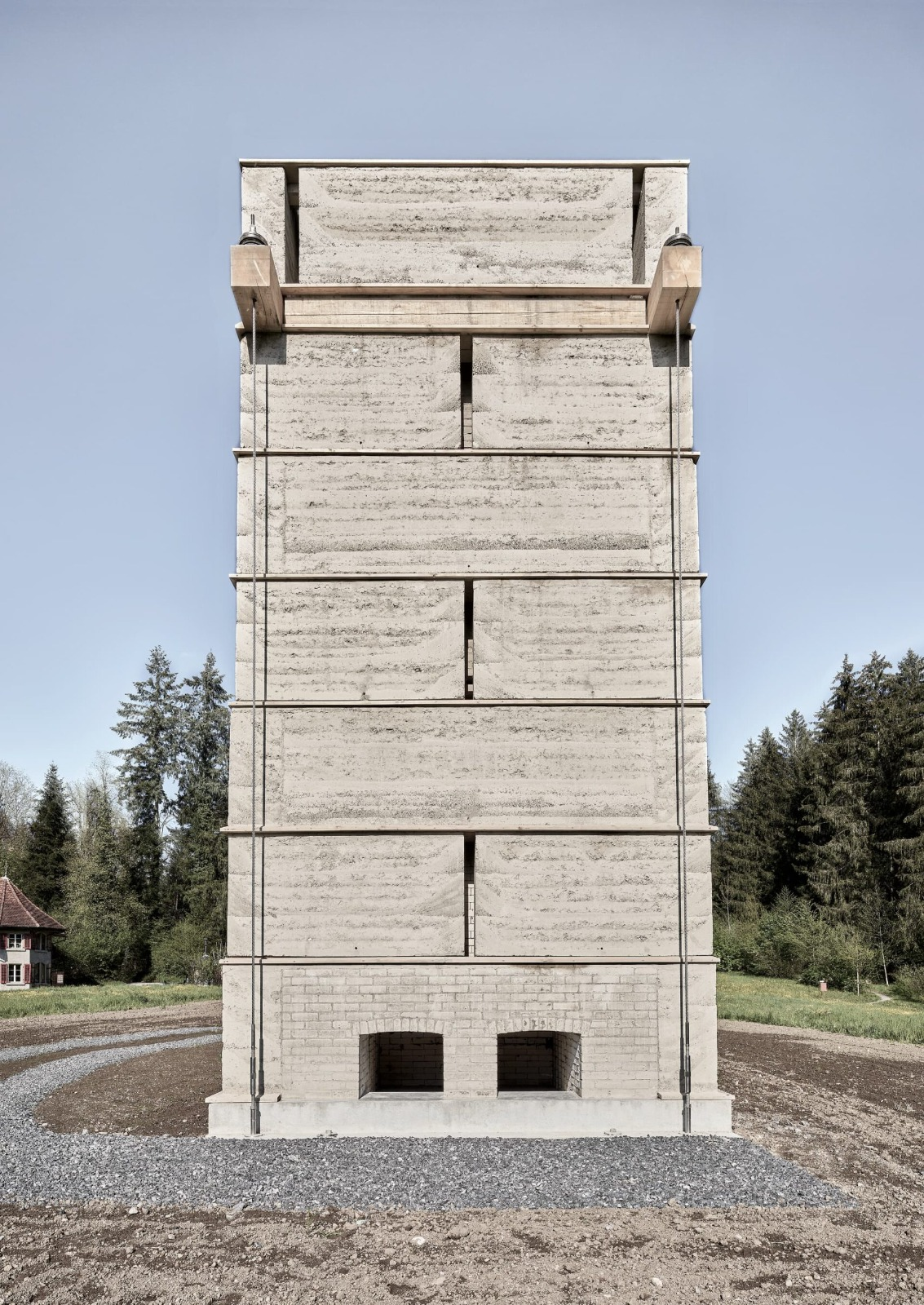
2008 — House Rauch
The first major step toward a contemporary reinterpretation of earth architecture.
2015 — Pisé: Rammed Earth – Tradition and Potential
Publication of a research volume bringing together historical knowledge and contemporary investigations into rammed earth construction.
2017 — Sitterwerk Mock-up
An experimental prototype in which the Prestressed Rammed Earth system was tested for the first time.
2017–2021 — Kiln Tower
The research was translated into a full-scale architectural building.
When a Prototype Becomes Architecture
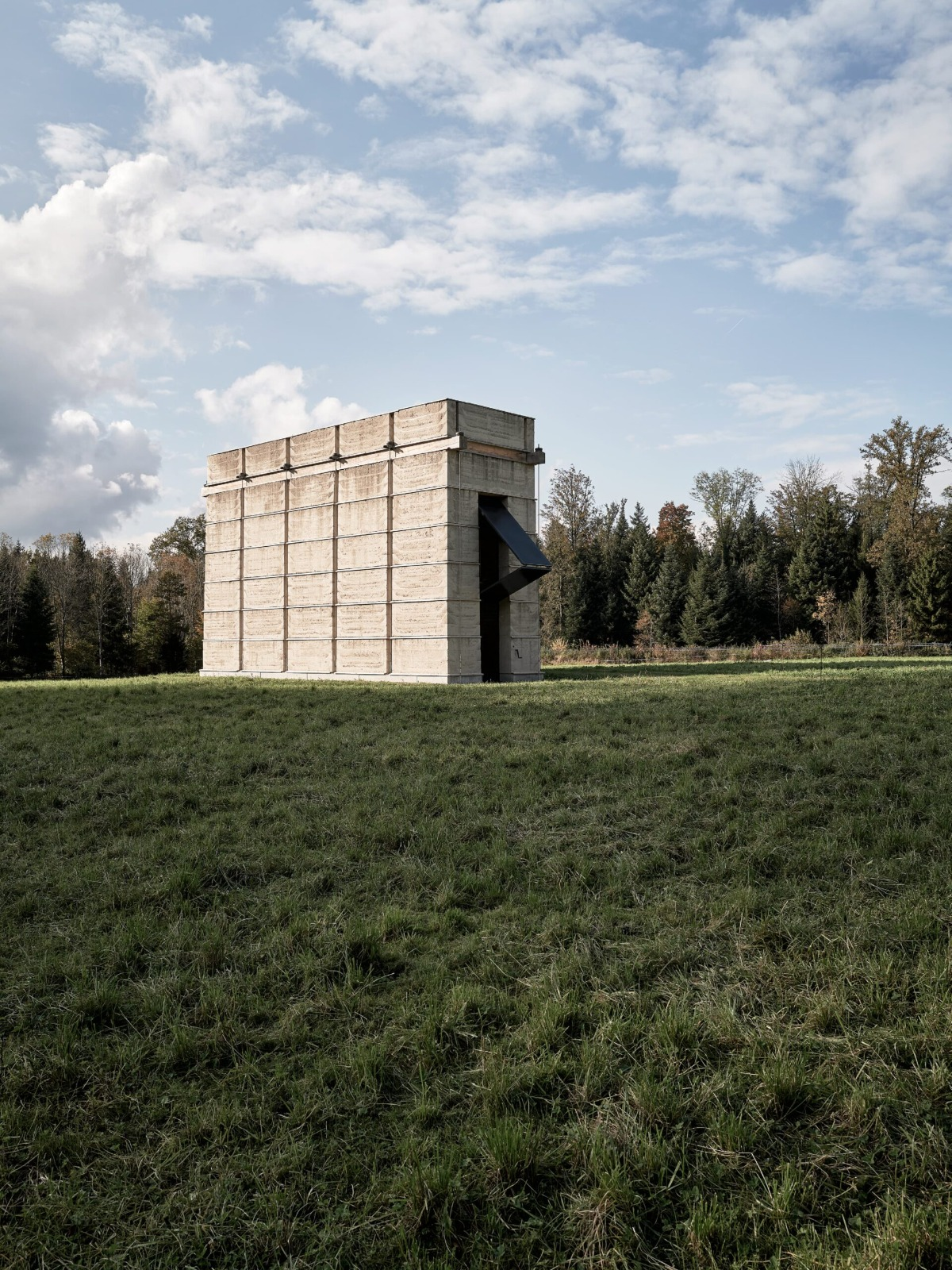
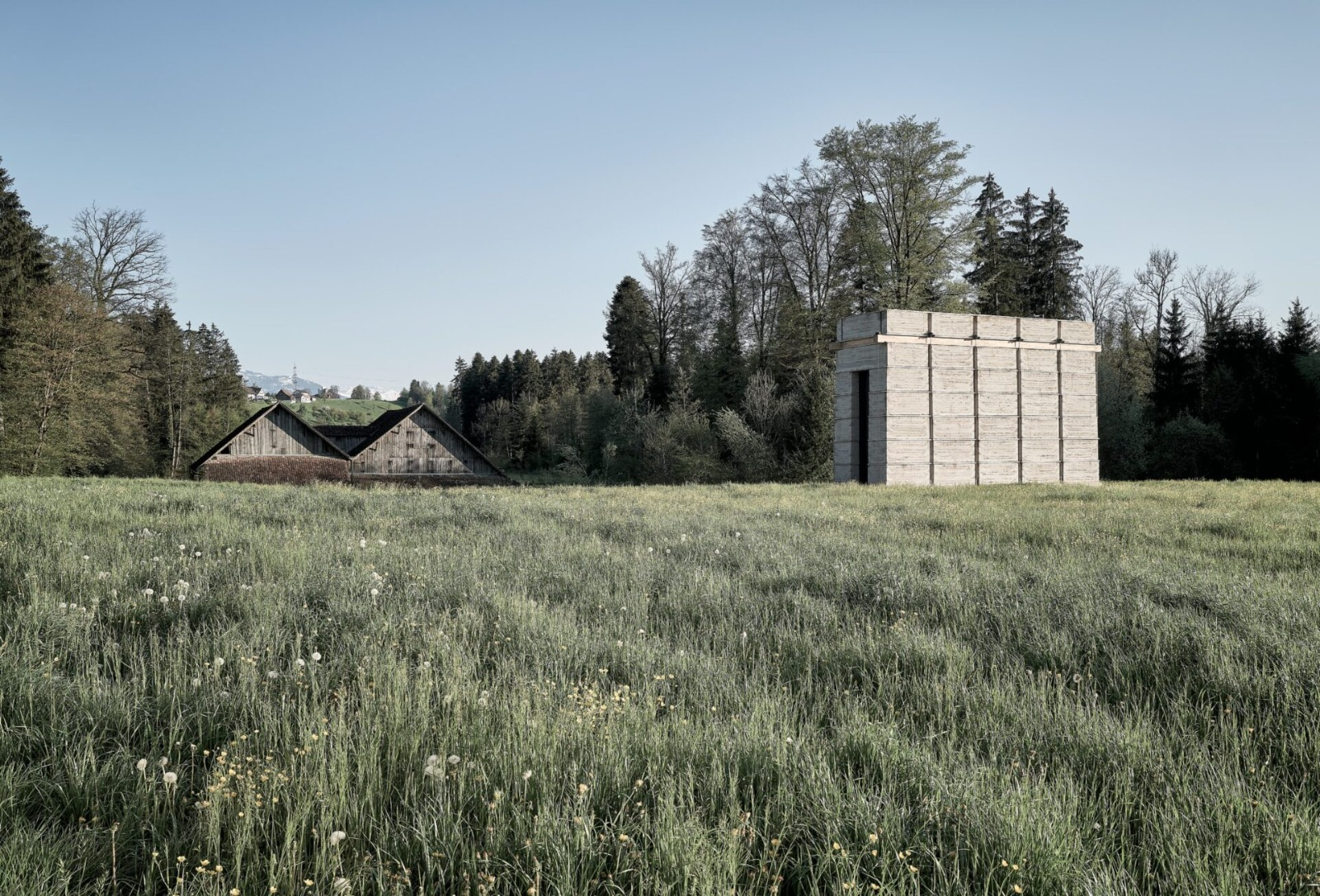
At first glance, the Kiln Tower, designed for the Brickworks Museum in Cham, Switzerland, appears to be a simple observation tower. In reality, it functions as a full-scale research laboratory.
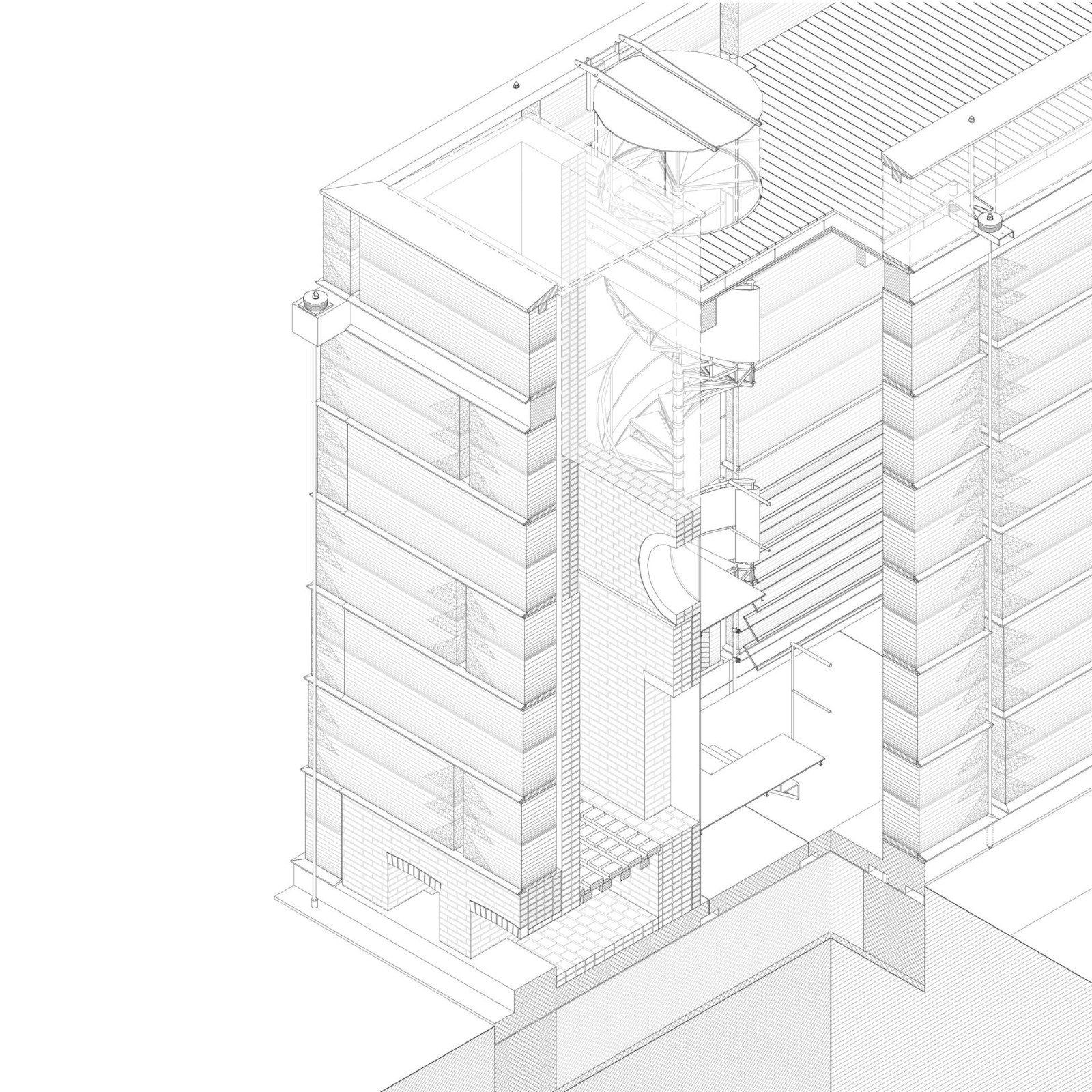
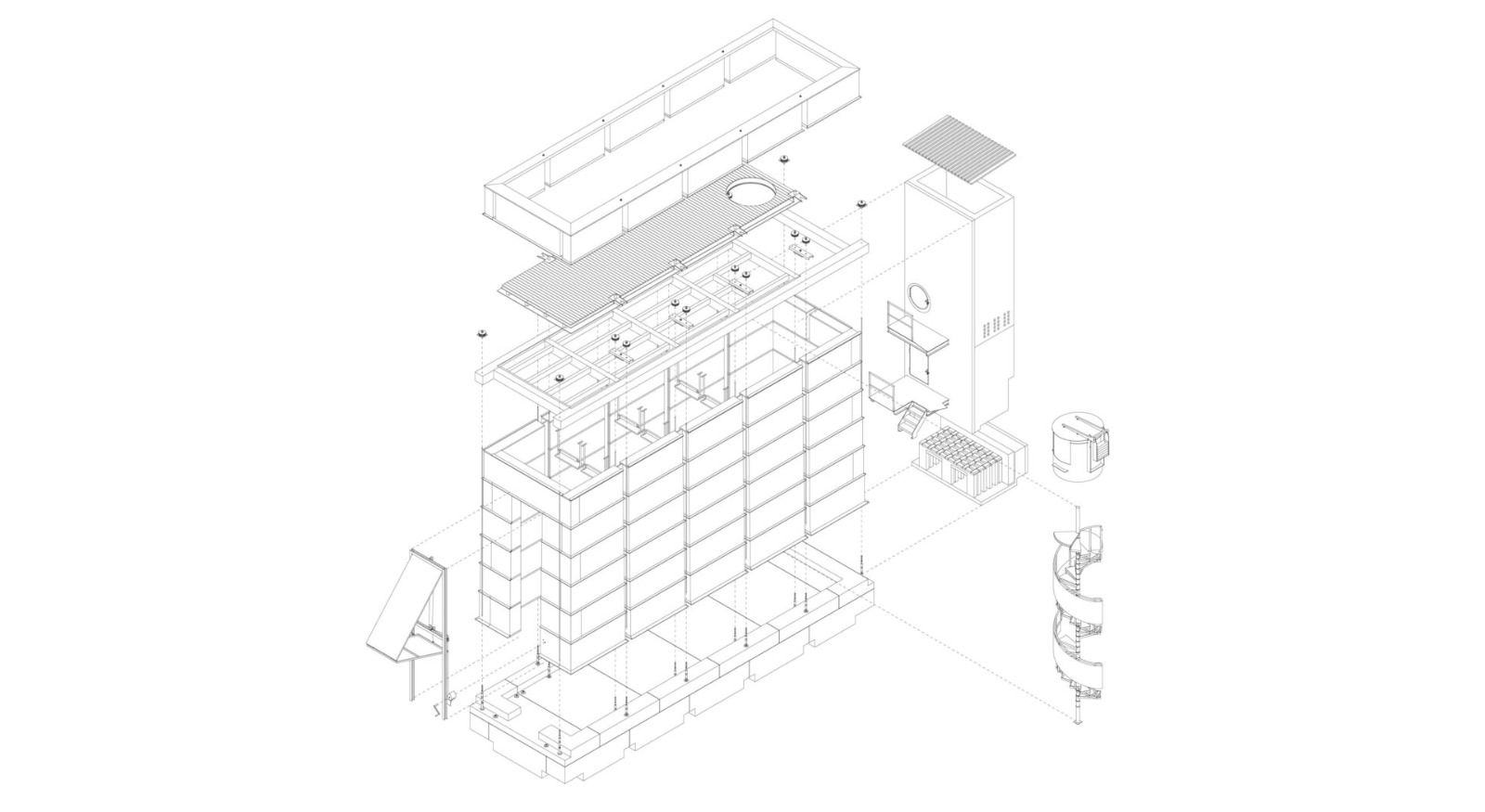
The project's principal innovation is its Prestressed Rammed Earth structural system. Prestressed steel tendons maintain the earth elements under constant compression, allowing the structure to overcome what has long been considered the greatest limitation of earth construction.
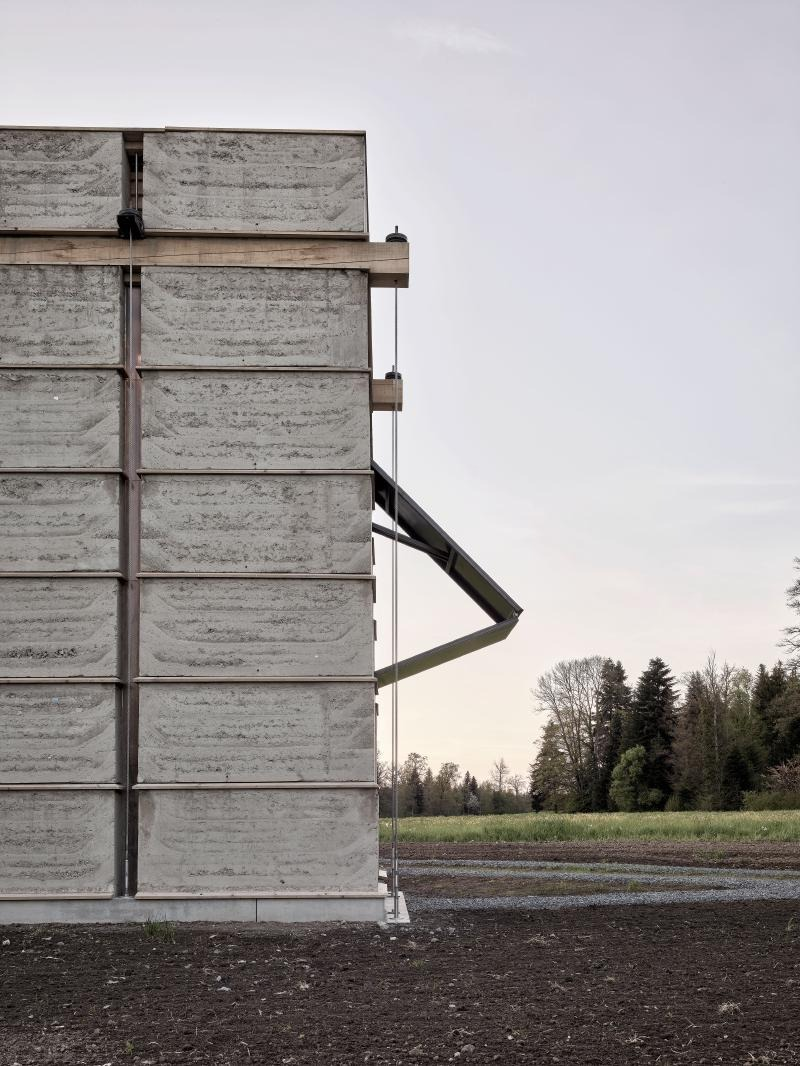
The project demonstrates that rammed earth can be employed not only in massive load-bearing walls, but also in taller, more sophisticated, and structurally ambitious buildings.
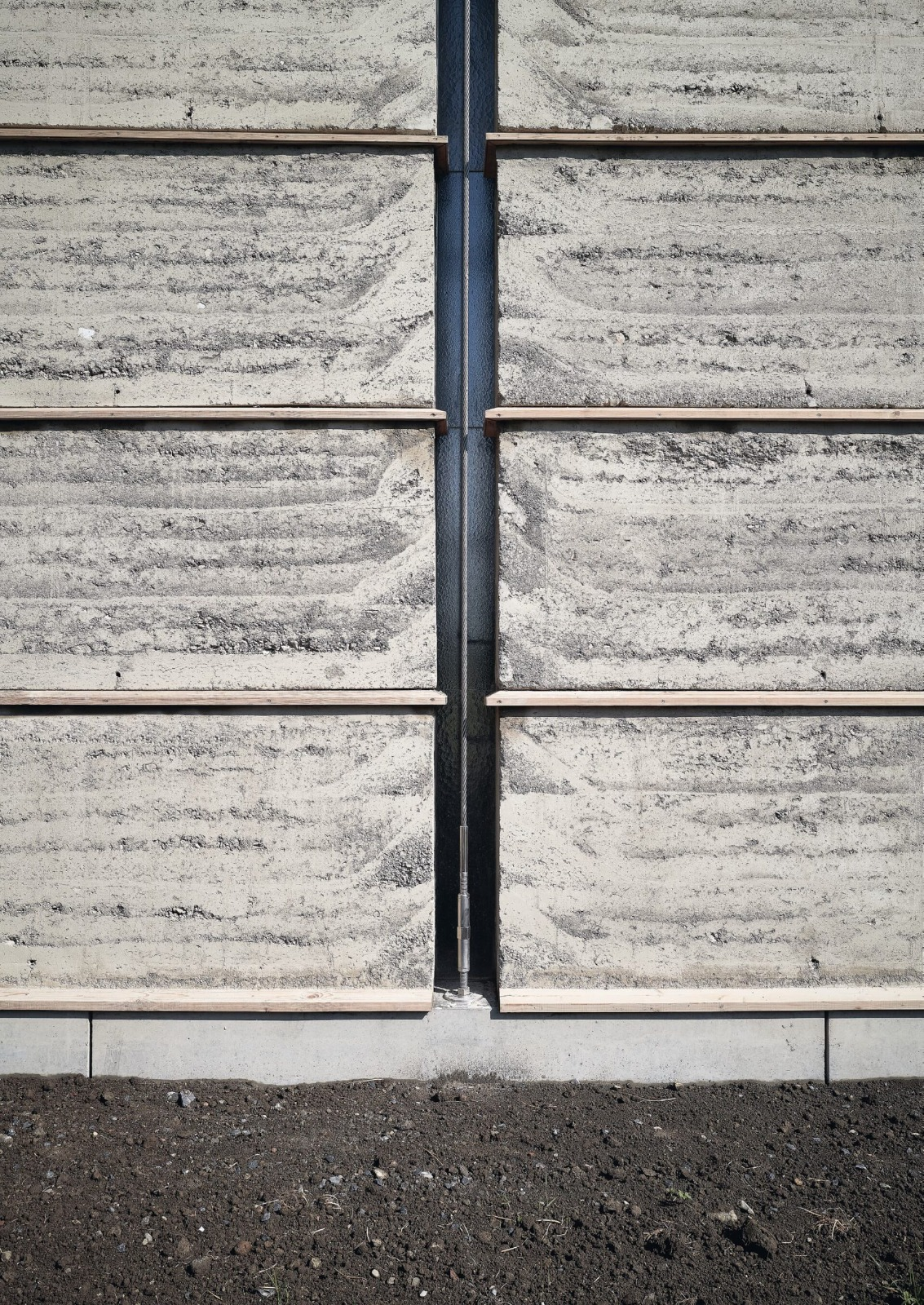
The tower deliberately exposes rather than conceals its construction. Steel elements, joints, and prefabricated earth blocks remain visible, transforming the building into an educational tool. Here, construction is no longer merely functional—it becomes an architectural language in its own right.
What Does Kiln Tower Teach Us?
The greatest achievement of Kiln Tower is neither its form nor its material.
Its true value lies in the research it represents.
What Did This Research Demonstrate?
- For the first time, a Prestressed Rammed Earth system was successfully realised in a full-scale building.
- It demonstrated that rammed earth, when combined with a prestressed steel system, can be applied to taller and more structurally resilient buildings.
- The research showed that prefabricated earth elements simplify construction and create opportunities for greater standardisation.
- The project confirmed that traditional construction methods can evolve through the integration of contemporary engineering without sacrificing their authenticity.
- Kiln Tower became not only an architectural object but also an ongoing research platform whose findings will contribute to the future development of earth construction.
Rather than providing a definitive answer, Kiln Tower raises new questions. It reminds us that the possibilities of earth architecture are far from exhausted, and that one of humanity's oldest building materials may still have an important role to play in the future of construction.
Project Information
Project: Kiln Tower for the Brickworks Museum
Architect: Roger Boltshauser / Boltshauser Architekten AG
Collaboration: Martin Rauch / Lehm Ton Erde
Location: Cham, Switzerland
Design and Construction: 2017–2021
Photo Credits
The photographs included in this article are the property of Boltshauser Architekten AG and the project's official photographers. All images have been sourced from the architectural practice's official project documentation and are credited accordingly.
Kiln Tower in the meadow at Cham, Switzerland.
Anastasia Dombrovskaia
Anastasia Dombrovskaia is an architect and researcher focused on the vernacular architecture of the Caucasus and on the intersection of traditional building techniques with contemporary engineering.